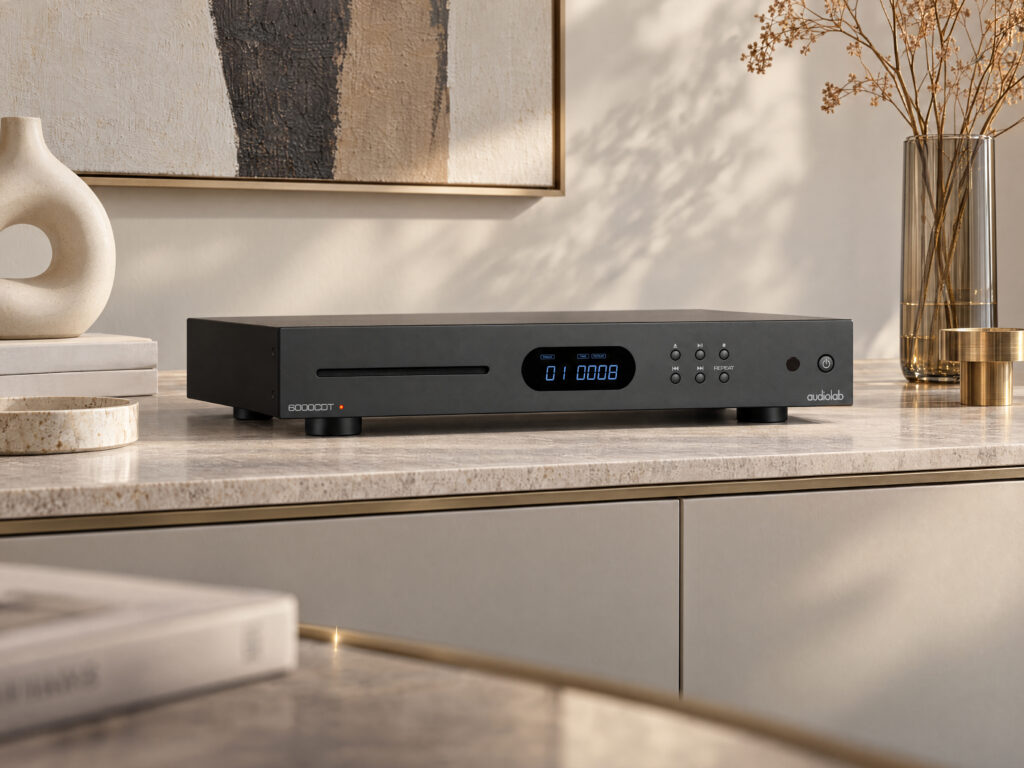
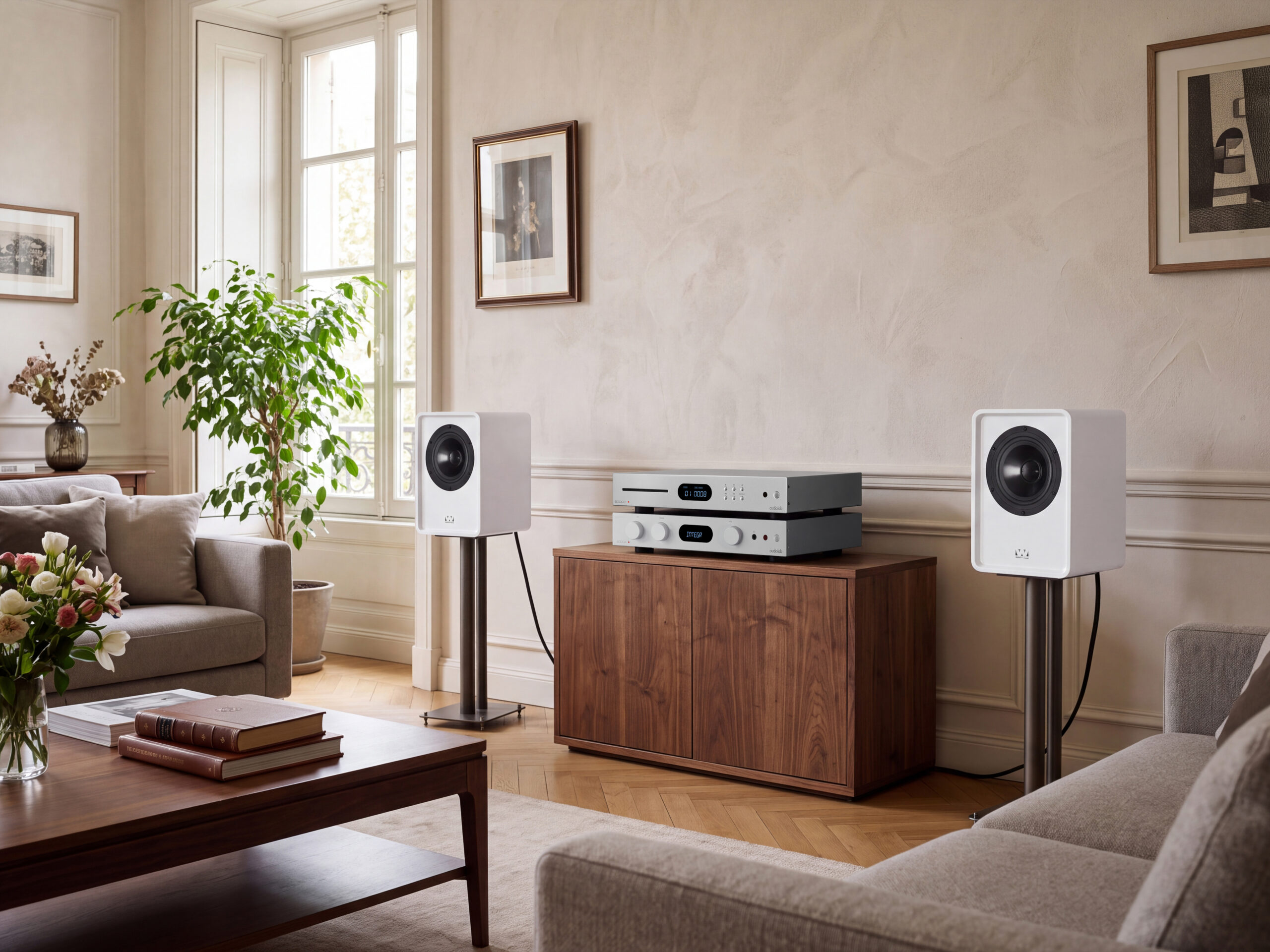
Audiolab 6000CDT MkII
Dedicated to discs: Audiolab’s entry-level CD transport, the 6000CDT, reaches new heights with an upgraded mechanism, revised servo control and redesigned power architecture – meet the 6000CDT MKII
When Audiolab launched its entry-level 6000 Series in 2018, the acclaimed 6000A amplifier grabbed many of the headlines. But another component unveiled alongside it also proved a great success – the 6000CDT CD transport.
There were few dedicated CD transports priced below £400 on the market at the time. The 6000CDT answered the need for a reliable, effective and affordable CD transport to pair with an external DAC (Digital-to-Analogue Converter) – whether that be the DAC in the matching Audiolab 6000A amp, or another DAC of the listener’s choice. For many it became the standout option, its sales during the past eight years demonstrating that CD remains an important format for music lovers around the world.
With CD sales growing strongly in some markets, including the USA, and the format continuing to outsell vinyl by album units in the UK, now is an opportune time for Audiolab to upgrade its most budget-friendly CD transport.
Since the 6000CDT first arrived, Audiolab has launched two component ranges positioned further upmarket – the 7000 and 9000 Series. The new 6000CDT MKII draws on engineering developed for these higher-end models, distilling it into an elevated design that’s familiar on the outside but comprehensively upgraded within. The result is a new-generation CD transport priced at an eminently accessible £399.
Audiolab’s new spin on the 6000CDT
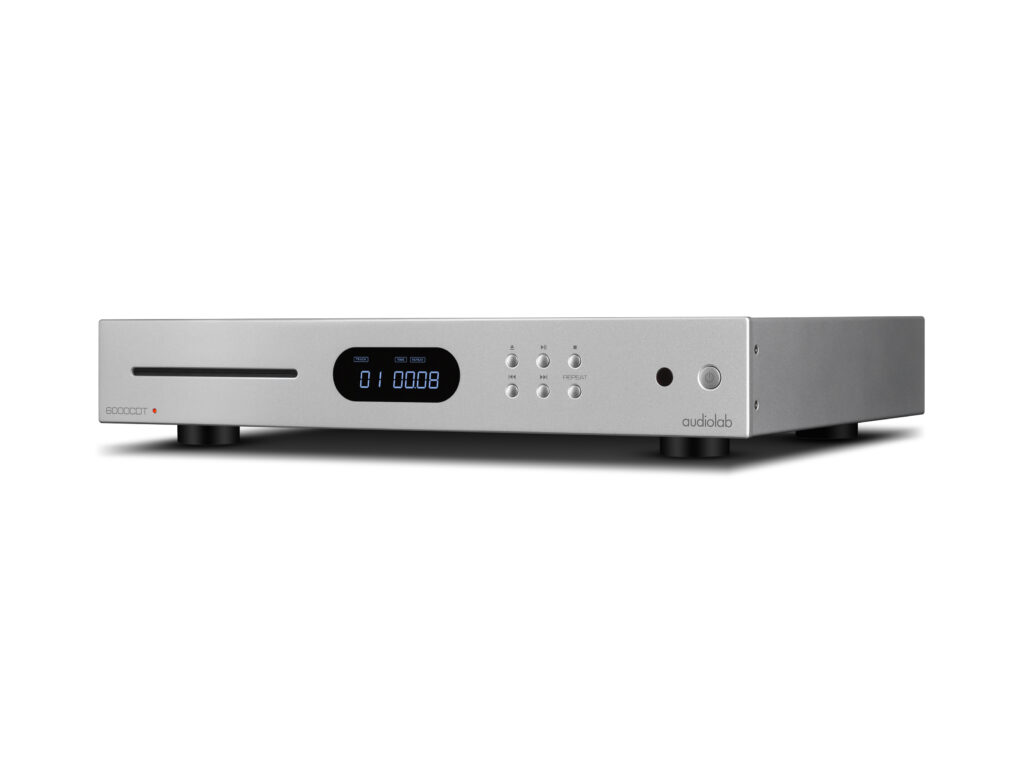
Since the 1990s, dedicated CD transports have played an important role in Audiolab’s range. Unlike conventional CD players, which combine a disc-reading transport and DAC circuitry in the same enclosure, CD transports read the disc and output a digital audio signal to feed an external DAC. This approach offers listeners the flexibility to choose their own DAC to suit their digital sources, while allowing the manufacturer to optimise the drive mechanism and associated electronics within a dedicated chassis. Crucially, housing the motor, laser and servo system separately also helps keep mechanical vibration and electrical noise away from the DAC’s sensitive analogue circuitry.
Priced at £379 when launched in 2018, the original 6000CDT was the most affordable CD transport Audiolab had ever produced. Its design combined a robust slot-loading mechanism, read-ahead buffering, precision master clocking, a shielded transport enclosure and a dedicated power supply.
Allowing for inflation, the new MKII represents even better value. It retains the same clarity of purpose but reworks the platform around five connected areas: a completely new CD mechanism, revised servo architecture, redesigned power-supply circuitry, an updated transformer implementation and revised master-clock circuitry. Together, these elements are designed to provide more consistent disc reading and a stable, clean S/PDIF digital output, with the mechanism, servo and power architecture engineered as one complete system.
New CD mechanism and laser servo system
The most fundamental change is the transport mechanism itself. A new slot-loading mechanism replaces the one in the original model, selected by Audiolab for its engineering quality and modified in-house to optimise its performance.
Disc loading, spindle rotation, laser positioning and vibration behaviour all influence reliable data recovery. The new mechanism is designed to improve physical stability, reduce operating noise and provide faster, more assured disc handling. More consistent tracking also gives the control system a better starting point with imperfect or lightly damaged discs. For listeners, this means quieter loading and playback, quicker response and dependable long-term operation.
This is paired with a revised servo control system which manages focus, tracking and disc speed, making rapid corrections as the laser follows the microscopic data track. It must respond continuously to disc eccentricity, surface imperfections, vibration and the changing rotational speed required from the inner to the outer edge of a CD.
More precise servo control improves data-acquisition stability, reduces unnecessary corrective activity and maintains consistent tracking. It also makes more effective use of the format’s error-correction process, particularly with discs in less-than-perfect condition. The aim is not to change the data stored on a correctly read disc, but to provide a more stable and reliable route to recovering it, giving the clocking and S/PDIF output stages a consistently acquired digital stream.
Redesigned power architecture
The 6000CDT MKII incorporates revised power-supply circuitry developed for the demands of the new transport platform. Motors and servo circuits create rapidly changing electrical loads, while the clock and digital output stages benefit from a quiet, stable supply. By managing the differing power demands of each element more carefully, the design minimises the influence of motor activity and electrical noise on sensitive digital circuitry.
The transformer implementation has also been reconsidered. A custom-specified transformer supports consistent current delivery to the mechanism and servo, while helping to maintain a low-noise environment for the clock and digital output stages. Its integration reflects lessons from Audiolab’s 7000 and 9000 Series development: power architecture must be designed around the circuits and mechanical systems it serves.
Precision from disc to DAC
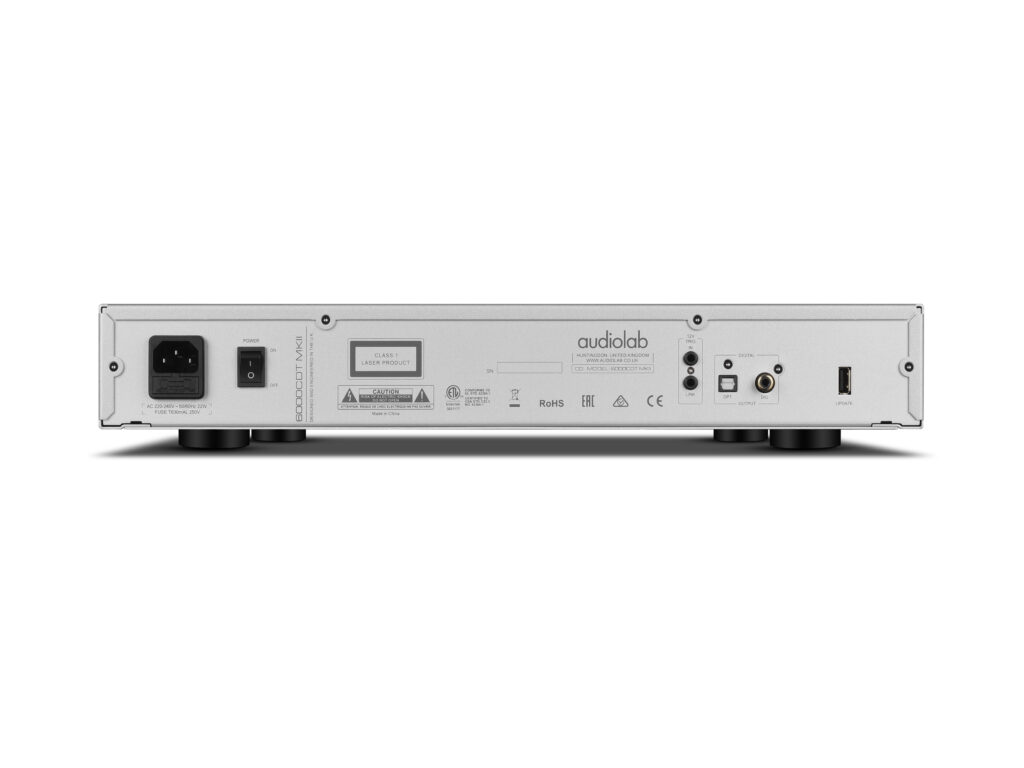
With no internal DAC or analogue output stage, the 6000CDT MKII focuses on reading the disc, managing the recovered data and sending it cleanly to an external DAC via either the optical or 75-ohm coaxial digital output.
The digital signal path is supported by an updated master-clock system, based on a temperature-compensated, ultra-precision crystal oscillator that provides a highly stable timing reference. This minimises timing errors (jitter) in the S/PDIF output, helping to preserve the integrity of the digital signal as it passes to the receiving DAC. The sonic benefits include greater precision in the reproduction of transients, tighter imaging and improved musical coherence.
In addition to standard ‘Red Book’ 16-bit/44.1kHz CDs, the 6000CDT MKII plays CD-R and CD-RW discs. It also plays data CDs containing FLAC, WAV, WMA, MP3 or APE files, with support for sample rates up to 96kHz (depending on the file format). Playback options include direct track access, repeat, random and programmed play for up to 99 tracks, with all information shown on a crisp, clear OLED display. Convenience features include selectable auto-standby options and 12V trigger input and output for system automation.
Let’s get physical
Streaming has transformed access to music, but CDs remain valued by music lovers with extensive collections and a preference for physical ownership and uncompressed playback. The 6000CDT MKII combines the focused architecture of its predecessor with the benefit of eight years of subsequent Audiolab engineering.
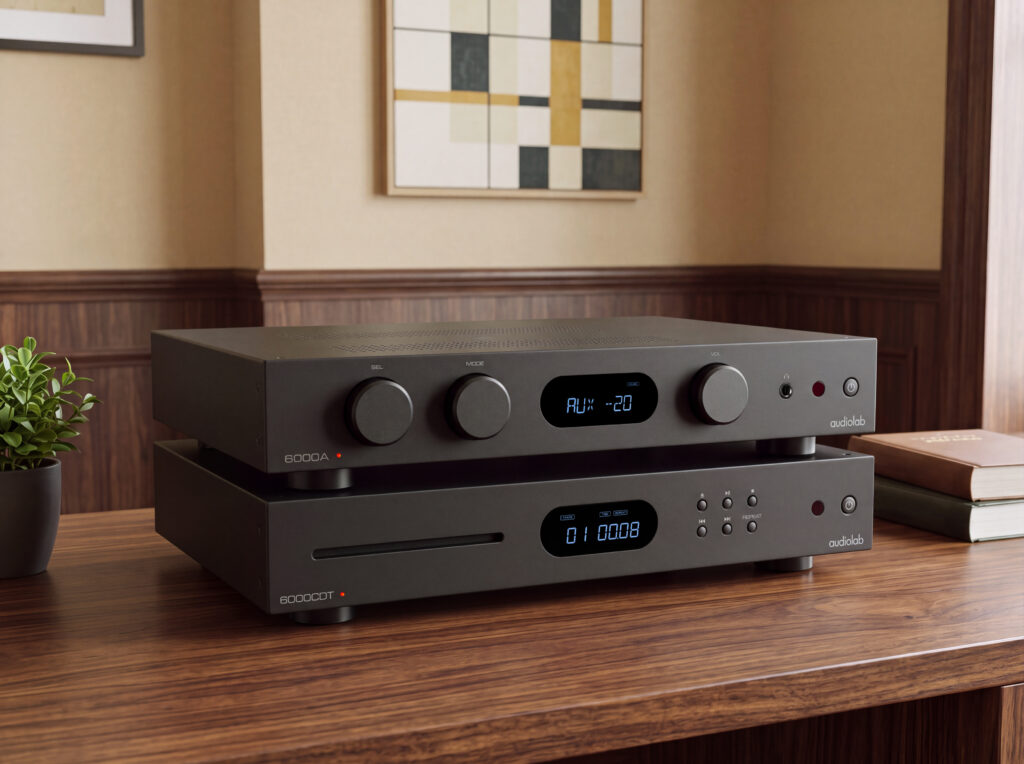
Technically and aesthetically, the 6000CDT MKII is the natural disc-spinning partner to Audiolab’s DAC-equipped 6000A MKII integrated amplifier. But it’s equally at home paired with a high-quality standalone DAC, allowing owners to enjoy their cherished CD collections for many years to come.
The Audiolab 6000CDT MKII CD transport is available from late November in a choice of black or silver, at an RRP of £399.
Formed in the early 1980s by Philip Swift and Derek Scotland, Audiolab earned worldwide acclaim with the 8000A – an integrated stereo amplifier that became a classic ‘step-up’ from the budget models of the time.
Since then, Audiolab’s reputation has been further enhanced by its highly respected DAC circuitry, earning the company a plethora of awards throughout the last two decades.
Today, the company continues to make class-leading source and amp components across its highly acclaimed 6000, 7000 and 9000 product lines, delivering crisp, clean ergonomics, purposeful functionality and superb sound with everything from vinyl to hi-res digital streaming.
Audiolab products are designed and engineered at the company’s HQ in Huntingdon, Cambridgeshire. www.audiolab.co.uk